
Early Signs of Termites in Wooden Furniture

Wooden furniture adds beauty, durability, and elegance to homes. From wooden beds and wardrobes to cabinets and dining tables, wood plays a major role in home interiors. However, one hidden enemy can silently destroy these valuable items — termites.
Termites are tiny insects that feed on cellulose found in wood and wooden materials. They can cause severe damage to furniture without showing obvious signs at first. By the time homeowners notice visible damage, termites may have already hollowed out large sections of the furniture.
Understanding the early signs of termites in wooden furniture is essential to protect your home and avoid expensive repairs or replacements. In this article, we will explain the most common warning signs, causes, prevention methods, and solutions for termite infestations.
What Are Termites?
Termites are small social insects often called “silent destroyers” because they damage wood and furniture from the inside out. They live in large colonies and continuously feed on wood fibers.
There are three common types of termites found in homes:
- Subterranean Termites
- Drywood Termites
- Damp wood Termites
Why Termites Attack Wooden Furniture
Termites attack wooden furniture because it contains cellulose, which is their primary food source.
Common factors that attract termites include:
- Moisture or damp wood
- Poor ventilation
- Wood touching soil
- Old untreated furniture
- Cracks in walls or floors
- Humid environments
Furniture placed near walls, floors, or damp areas is more vulnerable to termite attacks.
Early Signs of Termites in Wooden Furniture
Recognizing termite activity early can help prevent serious damage. Below are the most common warning signs.
1. Hollow Sound When Tapping Wood
One of the earliest signs of termite infestation is a hollow sound when tapping wooden furniture.
Termites eat wood from the inside and leave a thin outer layer intact. When you knock on the surface, the furniture may sound empty or hollow.
This usually indicates internal termite damage.
2. Small Holes in Wooden Furniture
Tiny holes appearing in furniture surfaces may indicate termite activity.
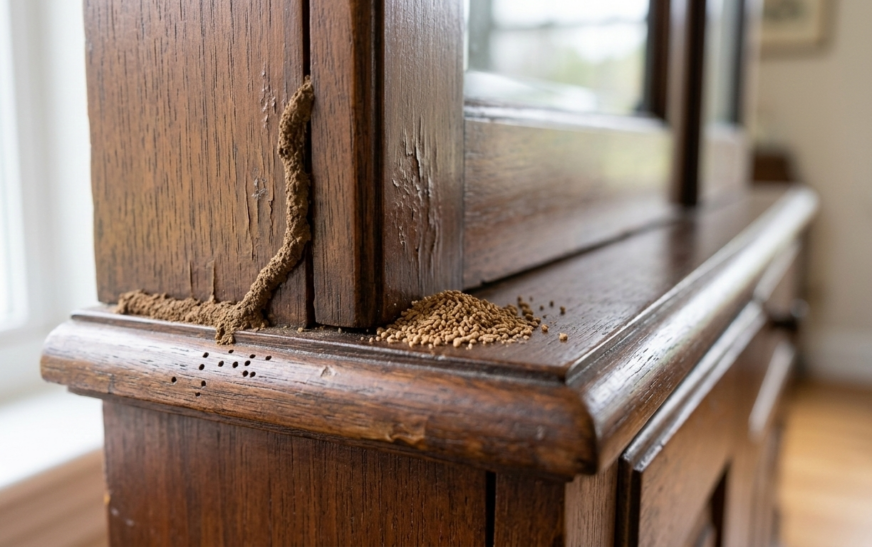
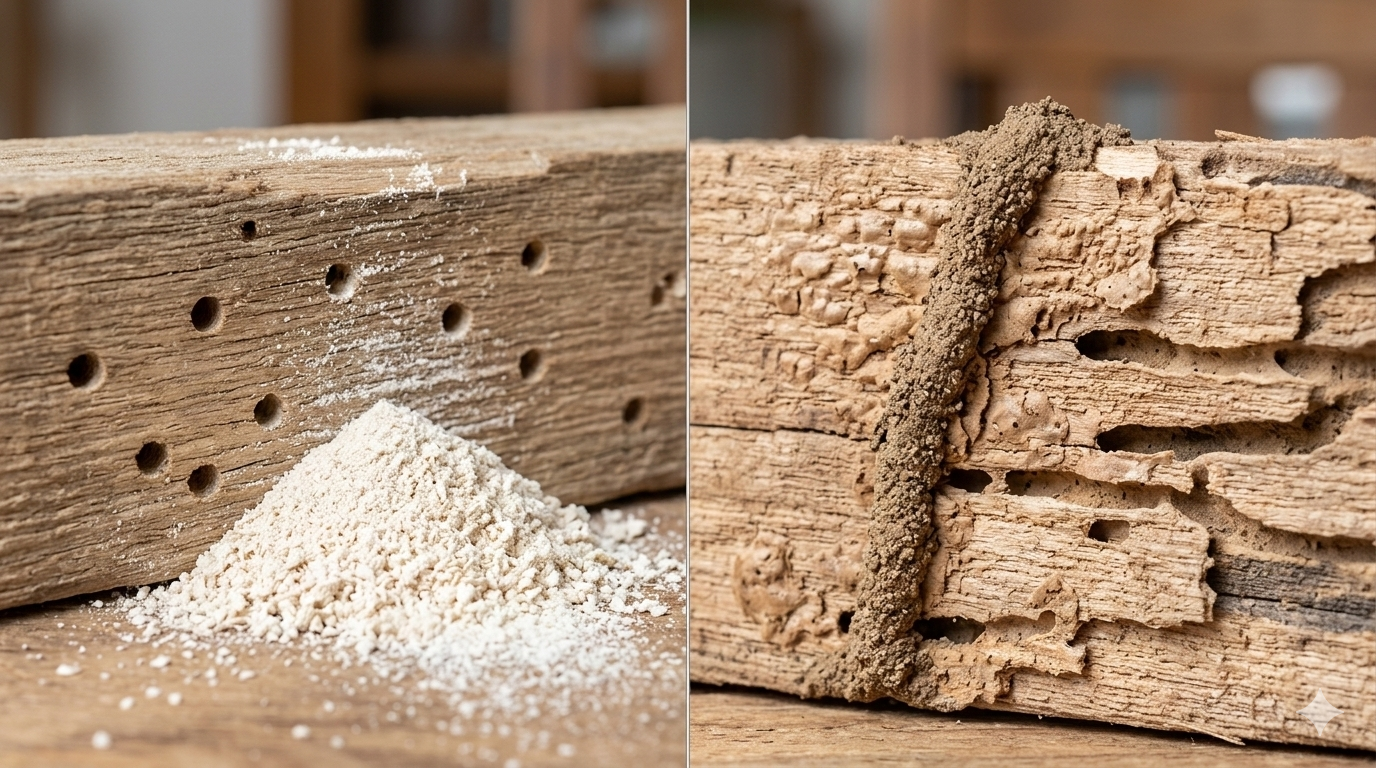
These holes are exit points used by termites to push out waste material called frass.
Common places where holes appear include:
- Wardrobes
- Wooden cabinets
- Wooden doors
- Dining tables
- Wooden shelves
3. Presence of Termite Droppings (Frass)
Termite droppings look like small wood-colored pellets or sawdust.
If you notice small piles of powder near furniture, it could indicate termite activity.
These droppings are usually found near:
- Wooden bed frames
- Furniture joints
- Wooden drawers
- Cupboards
4. Mud Tubes on Furniture or Walls
Subterranean termites build mud tubes to travel between their nest and food source.
These tubes protect termites from light and dryness.
Mud tubes are often found on:
- Walls near furniture
- Wooden cabinets touching walls
- Furniture legs near floors
If you see these tubes, it is a strong indication of termite infestation.
5. Damaged or Weak Wood
Wood damaged by termites becomes weak, brittle, or easily breakable.
You may notice:
- Crumbling wood
- Blistering surfaces
- Peeling paint
- Soft or sagging furniture parts
This means termites have already eaten the internal structure.
6. Tight or Hard-to-Open Drawers
Termites produce moisture while feeding, which can cause wood to swell.
This may result in:
- Drawers becoming difficult to open
- Doors getting stuck
- Furniture joints loosening
Such issues can indicate hidden termite damage.
7. Discarded Wings Near Furniture
During termite swarming season, reproductive termites leave their nests to start new colonies.
After landing, they shed their wings.
Finding small transparent wings near windows, floors, or furniture is a strong sign of termite activity.
How to Inspect Wooden Furniture for Termites
Regular inspection can help detect termite infestations early.
Follow these steps:
- Check furniture surfaces for holes or cracks.
- Tap wood to detect hollow sounds.
- Look for mud tubes near walls or furniture legs.
- Inspect dark corners and hidden areas.
- Check for termite droppings.
- Examine joints and underside of furniture.
Early inspection can prevent major structural damage.
How to Prevent Termites in Wooden Furniture
Prevention is the best way to protect furniture from termites.
Here are some effective methods:
1. Keep Furniture Dry
Termites thrive in moist environments. Ensure good ventilation and avoid damp areas.
2. Use Anti-Termite Polish
Applying termite-resistant wood polish or treatment can protect furniture.
3. Avoid Direct Contact with Walls
Keep furniture slightly away from walls and floors.
4. Fix Water Leaks
Repair leaking pipes, damp walls, or water seepage immediately.
5. Use Sunlight Exposure
Occasionally place furniture in sunlight to reduce moisture.
6. Regular Pest Control
Professional termite control treatments help prevent infestations.
Professional Termite Treatment Solutions
If termites have already infested your furniture, professional pest control services may be necessary.
Common termite treatment methods include:
- Anti-termite chemical treatment
- Wood injection treatment
- Termite bait systems
- Pre-construction termite treatment
- Post-construction termite treatment
Professional treatments eliminate termites and prevent future infestations.
Why Early Detection of Termites Is Important
Ignoring early termite signs can lead to serious consequences:
- Expensive furniture replacement
- Structural damage to homes
- Spread of termites to other wooden items
- Increased pest control costs
Early detection helps save money and protect property.
Not sure if it’s termites? Read our guide on Wood Borer vs Termite to identify the exact pest destroying your home.
FAQs
1. What are the first signs of termites in furniture?
The first signs include hollow wood, mud tubes, termite droppings, and small holes in furniture surfaces.
2. How do I know if termites are inside wood?
Tap the wood and listen for hollow sounds. Also check for frass, cracks, or weak wood.
3. Can termites destroy furniture completely?
Yes. If left untreated, termites can completely destroy wooden furniture within months or years.
4. Do termites spread from furniture to walls?
Yes. Termites can spread quickly and infest walls, floors, doors, and other wooden structures.
5. How often should furniture be inspected for termites?
It is recommended to inspect furniture at least once every 3–6 months.
Real Stories: Saving Homes & Businesses in Guntur/Vijayawada
Termites don’t just attack homes; they can devastate businesses too. Recently, KGN Pest Control has been helping neighbors across our region tackle heavy infestations:
In Yerrabalem: An individual house (1st & 2nd floors) was suffering from extensive damage across all areas. KGN performed a complete sweep to save the structure.
In Tadepalli/Undavalli: A 3 BHK flat required integrated service for both termites and cockroaches. The team was noted for their “honesty and responsibility” in clearing the property. * Commercial Success: The JL New Fashion Showroom faced heavy termite damage in their cupboards, which KGN successfully removed to protect their inventory.
Protect Your Home Today: Visit KGN Pest Control – Termite Experts or call their team for a professional termite inspection.
Conclusion
Termites are one of the most destructive pests that can silently damage wooden furniture and home structures. Because they often work from inside the wood, many homeowners fail to notice the infestation until severe damage occurs.
By learning the early signs of termites in wooden furniture, such as hollow wood, mud tubes, frass, and discarded wings, you can detect infestations before they spread.
Regular inspections, proper maintenance, moisture control, and professional termite treatments are essential steps to protect your furniture and home.
Taking action early will save money, protect valuable furniture, and keep your living space termite-free.
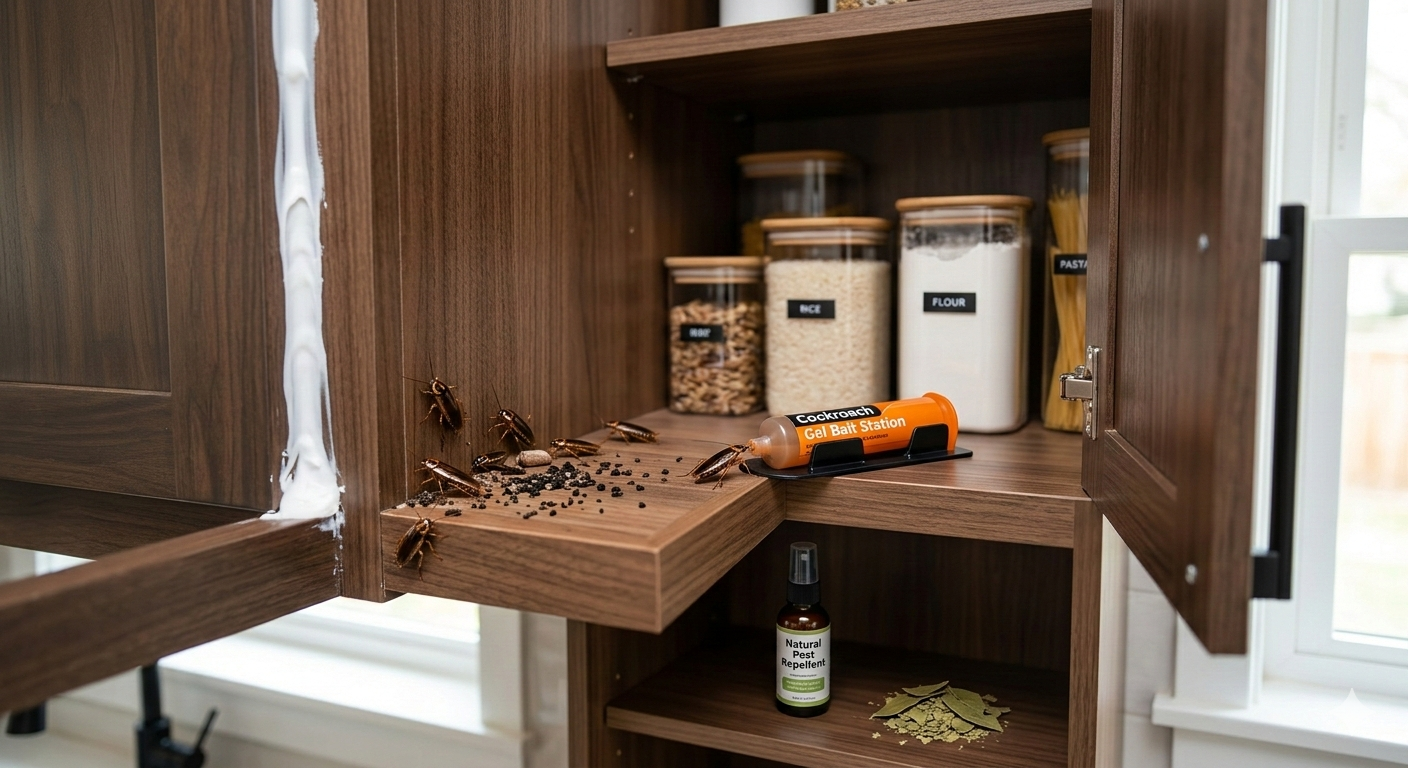
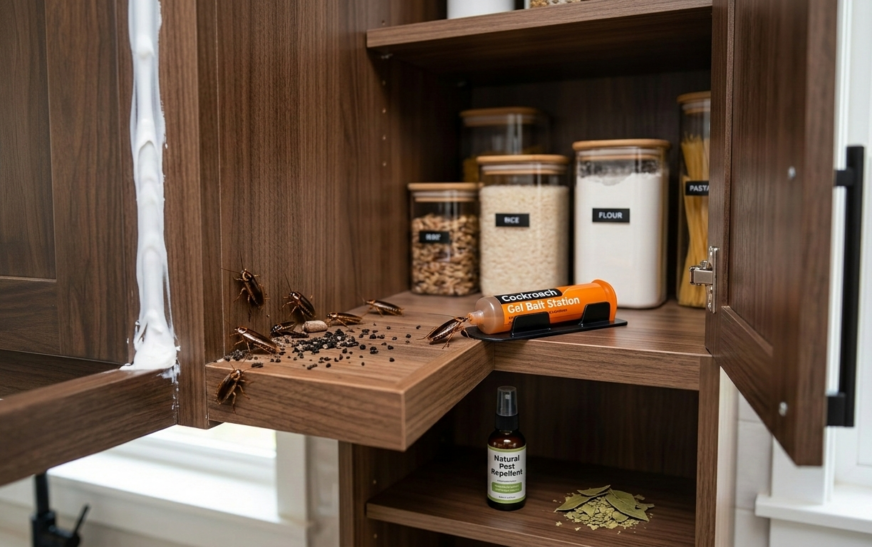
If you are dealing with multiple pests like Jaya Kishore in Tadepalli, check out our 7 Powerful Tricks to Stop Small Cockroaches to secure your kitchen while we handle the termites.



1 Comment
[…] more about the [early signs of termites in wooden furniture] to see detailed photos of mud tubes and […]